ในบทความนี้
In this post
ป้ายแผ่นนั้นเป็นกระดาษ A4 ธรรมดา เขียนด้วยปากกาเคมีสีน้ำเงิน: “เซ้งร้าน ติดต่อเจ้าของ” คุณคงเคยเห็นป้ายทำนองนี้สักครั้ง — ลองนึกภาพร้านก๋วยเตี๋ยวหน้าปากซอยของคุณ ร้านที่เปิดมาก่อนคุณย้ายเข้ามาอยู่ กระจกบานที่เคยขึ้นไอน้ำทุกเจ็ดโมงเช้า วันหนึ่งกลับแห้งสนิท และมีกระดาษแผ่นเดียวแปะอยู่ตรงระดับสายตา เส้นตัวหนังสือหนักแน่นเหมือนคนเขียนตัดสินใจมานานแล้ว แต่เพิ่งยอมลงมือเขียนวันนี้
ร้านแบบนั้นรอดน้ำท่วมใหญ่มาแล้ว รอดโควิดมาแล้ว แต่ไม่รอดโครงการก่อสร้างสะพานข้ามแยกที่กินเวลาสามปี ทางเท้าหายไปก่อน แล้วที่จอดรถ แล้วลูกค้า — หายทีละคนอย่างสุภาพ สิ่งที่ขวางทางร้านไม่ใช่คลื่นยักษ์หรือไฟไหม้ แต่เป็นแผงเหล็กสีส้มที่ตั้งอยู่เฉย ๆ ทุกวัน ตั้งอยู่นานพอจนวันหนึ่งเจ้าของร้านหยิบปากกาเคมีขึ้นมา
สักวันหนึ่ง ป้ายแบบนี้จะมาถึงเราทุกคนในรูปแบบใดรูปแบบหนึ่ง ซองผลตรวจจากโรงพยาบาล อีเมลหัวข้อ “การปรับโครงสร้างองค์กร” ที่เข้ามาตอนห้าโมงเย็นวันศุกร์ สายโทรศัพท์กลางดึกจากต่างจังหวัด คำถามที่บทความนี้อยากถือไว้จนถึงบรรทัดสุดท้ายจึงไม่ใช่ “ทำอย่างไรไม่ให้มันมา” — เพราะมันมาแน่ — แต่เป็นคำถามที่เงียบกว่านั้น: เมื่อมันมาถึงแล้ว เหลืออะไรอยู่ในมือเราจริง ๆ บ้าง
ตอนที่แล้ว (Attention Is Devotion) เราฝึกความใส่ใจ — การเลือกว่าจะวางสายตาไว้กับอะไร ตอนนี้คือข้อสอบของวิชานั้น: เมื่อสิ่งที่สายตาวางอยู่ตรงหน้าคือกำแพง มนุษย์สามคนจากสามศตวรรษทิ้งประโยคไว้ให้เราคนละประโยค — จักรพรรดิที่เขียนถึงตัวเอง จิตแพทย์ที่รอดจากค่ายมรณะ และนักปรัชญาที่ล้มลงกลางจัตุรัสในตูริน ทั้งสามประโยคถูกพิมพ์ลงโปสเตอร์จนเรียบเกลี้ยง แต่ต้นฉบับจริงขรุขระกว่านั้น และซื่อสัตย์กว่านั้นมาก
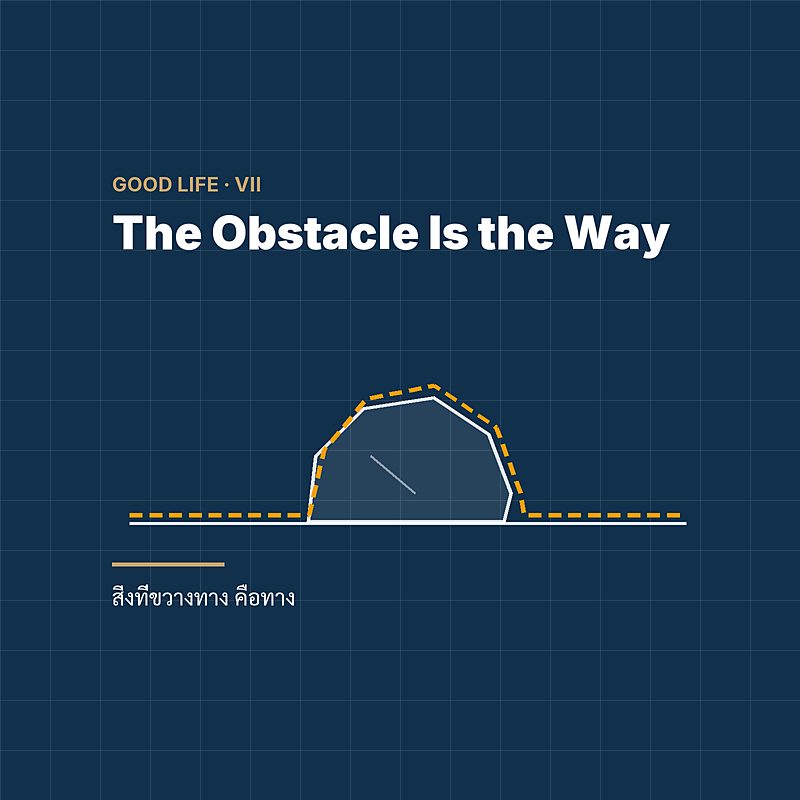
สิ่งที่ขวางทาง คือทาง
“อุปสรรคของการกระทำ กลับผลักการกระทำไปข้างหน้า สิ่งที่ยืนขวางทาง กลายเป็นทางเสียเอง”
มาร์คุส เอาเรลิอุส, Meditations 5.20 (tr. Gregory Hays) — ผู้เขียนแปล
“The impediment to action advances action. What stands in the way becomes the way.”
คนเขียนประโยคนี้ไม่ได้นั่งอยู่ในห้องสมุด เขานั่งอยู่ในค่ายทหารริมแม่น้ำดานูบ ราวปี ค.ศ. 170–180 กลางสงครามกับชนเผ่าทางเหนือ กลางโรคระบาดที่คร่าคนทั้งจักรวรรดิ มาร์คุส เอาเรลิอุส เป็นจักรพรรดิโรมันที่เขียนสมุดบันทึกเป็นภาษากรีก ตั้งชื่ออย่างไม่ตั้งใจว่า Ta eis heauton — “ถึงตัวเอง” เขาไม่เคยตั้งใจให้ใครอ่าน ไม่ได้เขียนสอนใคร ประโยคที่โลกจำได้จึงไม่ใช่คำเทศน์ แต่เป็นเสียงคนคนหนึ่งกำลังเตือนตัวเองกลางคืนที่ยากลำบาก
และบริบทเต็มของข้อ 5.20 ก็น่าประหลาดใจ: มันไม่ได้พูดถึงอุปสรรคลอย ๆ มันพูดถึงคน มาร์คุสเขียนว่า งานของเราคือทำดีต่อเพื่อนมนุษย์และอดทนต่อพวกเขา แต่เมื่อบางคนขวางงานที่ถูกต้องของเรา เขาก็กลายเป็นเหมือนแดด เหมือนลม เหมือนสัตว์ป่า — คือสิ่งที่ขวางการกระทำของเราได้ แต่ขวางเจตนาและท่าทีของเราไม่ได้ เพราะใจเราปรับตัวได้ แปลงสิ่งที่ขวางให้เป็นเชื้อเพลิงของงานเดิมได้ สองประโยคที่โด่งดังคือบทสรุปท้ายย่อหน้านั้น
สำนวนแปลเก่าของ George Long เก็บกลไกนี้ไว้ชัดกว่า: ใจ “เปลี่ยนทุกสิ่งที่กีดขวางการงานของมัน ให้กลายเป็นเครื่องช่วยการงานนั้น” (converts every hindrance into an aid) — สิ่งที่เป็นเครื่องกีดขวางบนถนน กลับช่วยเราไปตามถนนสายนั้นเอง ไม่มีเวทมนตร์ในนี้เลย มีแต่การประกาศเขตแดน: การกระทำถูกยึดได้ เจตนายึดไม่ได้
ยุคเราหยิบประโยคนี้ไปไกลมาก หนังสือขายดีปี 2014 ของไรอัน ฮอลิเดย์ ใช้มันเป็นชื่อเล่มตรง ๆ — The Obstacle Is the Way — ทีมกีฬาอาชีพเอาไปติดห้องแต่งตัว และระหว่างทางประโยคก็ค่อย ๆ เพี้ยนเป็นคาถา: อุปสรรคคือของขวัญ ความลำบากคือโอกาสเสมอ แต่มาร์คุสไม่เคยพูดว่ากำแพงเป็นของดี ไม่เคยสัญญาว่าเราจะขอบคุณมันทีหลัง เขาพูดเพียงว่า จุดหมายยังเป็นของเรา เส้นทางเปลี่ยนได้ — เหมือนแอปนำทางที่คำนวณเส้นทางใหม่ทันทีที่ถนนปิด โดยไม่เคยสรรเสริญรถติดสักคำ
สิ่งที่ 5.20 ขอจากเราจึงเล็กและยากพร้อมกัน: แยก “การกระทำที่ถูกขวาง” ออกจาก “เจตนาที่ยังเลือกได้” ให้เป็น แล้วทำงานต่อจากฝั่งที่ยังเป็นของเรา ร้านก๋วยเตี๋ยวเปิดหน้าเดิมไม่ได้ — นั่นคือการกระทำที่ถูกขวาง แต่ฝีมือต้มน้ำซุปสามสิบปี ความไว้ใจของลูกค้าเก่า ความรู้ว่าซอยไหนยังไม่มีของกิน — สิ่งเหล่านั้นยังไม่มีใครยึดไปได้
เสรีภาพข้อสุดท้าย
“ทุกสิ่งพรากไปจากมนุษย์ได้หมด เว้นอยู่สิ่งเดียว: เสรีภาพข้อสุดท้ายของความเป็นมนุษย์ — การเลือกท่าทีของตนในสถานการณ์ใดก็ตาม การเลือกทางของตนเอง”
วิกเตอร์ อี. แฟรงเคิล, Man's Search for Meaning (1946; tr. Ilse Lasch, Beacon Press) — ผู้เขียนแปล
“Everything can be taken from a man but one thing: the last of the human freedoms — to choose one's attitude in any given set of circumstances, to choose one's own way.”
ประโยคนี้มาจากหนังสือเล่มบาง ที่จิตแพทย์ชาวเวียนนาเขียนขึ้นจากสามปีในค่ายกักกันสี่แห่ง และมันไม่ได้ลอยมาเดี่ยว ๆ ในหน้าเดียวกัน แฟรงเคิลเล่าถึงนักโทษบางคนที่ “เดินไปตามเรือนนอน ปลอบคนอื่น ยื่นขนมปังชิ้นสุดท้ายของตัวเองให้” แล้วเขียนต่อทันทีว่าคนแบบนั้นมีจำนวนน้อย — แต่น้อยแค่ไหนก็เพียงพอจะพิสูจน์ว่า สิ่งสุดท้ายที่ยังพรากไปไม่ได้มีอยู่จริง[2]
อ่านให้ตรง ประโยคนี้ไม่ได้บอกว่าท่าทีที่ดีจะช่วยให้รอดชีวิต แฟรงเคิลเองเขียนไว้ในเล่มเดียวกันอย่างเจ็บปวดว่า “พวกเราที่กลับมา... รู้ดี: คนที่ดีที่สุดในหมู่เราไม่ได้กลับมา” และทั้งเล่มเต็มไปด้วยคำว่าโชคและความบังเอิญ เสรีภาพที่เขาพูดถึงจึงบางเหลือเกิน — บางเท่ากระดาษ — และบางทีเพราะความบางนั้นเอง มันจึงมีค่าพอให้คนคนหนึ่งยึดไว้ต่างชีวิต
มีเรื่องหนึ่งที่ต้องเล่าอย่างตรงไปตรงมา: ประโยคที่โลกจำว่าเป็นของแฟรงเคิลมากที่สุด — “ระหว่างสิ่งเร้ากับการตอบสนอง มีช่องว่างหนึ่งอยู่ ในช่องว่างนั้นคืออำนาจของเราที่จะเลือก...” (Between stimulus and response there is a space...) — ไม่พบในงานเขียนของเขาเลย สถาบันวิกเตอร์ แฟรงเคิล ที่เวียนนายืนยันเรื่องนี้เอง: สตีเฟน โควีย์ เล่าว่าเขาอ่านพบถ้อยคำนี้ในหนังสือเล่มหนึ่งในห้องสมุด และไม่ได้จดชื่อผู้แต่งไว้ โควีย์ใช้มันสรุปความคิดของแฟรงเคิล แล้วโลกก็ค่อย ๆ ยกถ้อยคำของผู้อ่าน ไปติดชื่อนักคิด[4] ไม่ใช่เรื่องน่าเยาะ — บางครั้งคำสรุปที่งดงามที่สุดของนักคิดคนหนึ่ง ก็เขียนโดยผู้อ่านของเขา แต่ความซื่อสัตย์ต่อต้นทางบังคับให้เราบอกให้ถูกว่าใครเขียนอะไร
สิ่งที่ประโยคจริงขอจากเรา: ในสถานการณ์ที่เลือกอะไรไม่ได้เลย ยังเหลือการเลือกอยู่หนึ่งชั้น — เลือกท่าที และแฟรงเคิลเล็งประโยคนี้ใส่ตัวเองก่อนเสมอ ไม่ใช่เครื่องมือไว้ตัดสินคนอื่นว่า “ทุกข์เพราะเลือกท่าทีไม่เป็น” ใครหยิบมันไปใช้แบบหลัง คือหยิบไปคนละเล่มกับที่เขาเขียน
สิ่งที่ไม่ฆ่าเรา — และสิ่งที่มันไม่ได้สัญญา
“สิ่งที่ไม่ฆ่าฉัน ทำให้ฉันแข็งแกร่งขึ้น”
ฟรีดริช นีทเช่, Götzen-Dämmerung (1889), “Sprüche und Pfeile” §8 — ผู้เขียนแปล
“Was mich nicht umbringt, macht mich stärker.”
นีทเช่เขียน Götzen-Dämmerung (สนธยาแห่งเทวรูป) จบภายในราวหนึ่งสัปดาห์ ปลายฤดูร้อนปี 1888 — ปีที่เขาผลิตหนังสือถึงห้าเล่ม และเป็นปีสุดท้ายที่สติของเขายังเป็นของเขา คำคมข้อ 8 ในหมวด “คติพจน์และลูกศร” มีท่อนนำที่โปสเตอร์มักตัดทิ้ง ฉบับแปลอังกฤษของลูโดวีชีขึ้นต้นว่า “From the military school of life” — จากโรงเรียนฝึกทหารแห่งชีวิต แล้วจึงตามด้วยประโยคที่โลกจำ นี่คือภาษาของคนที่มองชีวิตตัวเองเป็นค่ายฝึกอันโหดร้าย ไม่ใช่ภาษาของโค้ชบนเวที
และเขามีสิทธิ์พูดแบบนั้นกับตัวเอง นีทเช่มีชีวิตอยู่กับไมเกรนรุนแรง สายตาที่เกือบบอด และกระเพาะที่ทรมานเขาไม่เว้นปี ใน Ecce Homo เขาเขียนถึงช่วงที่ร่างกายทรุดต่ำสุดว่า “ฉันเอาตัวเองไว้ในมือของตัวเอง ฉันทำให้ตัวเองกลับมามีสุขภาพดี” และว่า สำหรับธรรมชาติที่แข็งแรงโดยเนื้อแท้ ความป่วยไข้อาจกลายเป็นแรงกระตุ้นชีวิตได้ด้วยซ้ำ คำคมข้อ 8 คือยาที่คนป่วยคนหนึ่งปรุงให้ตัวเอง
แล้วเรื่องจริงก็โหดร้ายกับผู้เขียนของมัน ไม่กี่เดือนหลังเขียนจบ — 3 มกราคม 1889 — นีทเช่ล้มลงกลางเมืองตูริน (เรื่องเล่าว่าเขาโผเข้ากอดม้าที่ถูกเฆี่ยนนั้นแพร่หลายมาก แต่ไม่มีหลักฐานยืนยัน) จากวันนั้นจนวันตายในปี 1900 เขาไม่เคยกลับมาเป็นตัวเองอีก สิบเอ็ดปีสุดท้ายอยู่ในความดูแลของแม่ แล้วก็น้องสาว สิ่งที่ไม่ฆ่าเขา ไม่ได้ทำให้เขาแข็งแกร่งขึ้น ประโยคนี้จึงต้องอ่านเป็นความหวังอันดุดันของคนคนหนึ่ง — ไม่ใช่กฎของจักรวาล
แต่โลกเอาไปใช้เป็นกฎ จากท่อนฮุกเพลงของเคลลี คลาร์กสัน ปี 2012 ถึงโปสเตอร์ในยิม ถึงประโยคปลอบที่เราขว้างใส่คนเพิ่งสูญเสียว่า “เดี๋ยวก็แกร่งขึ้นเอง” — ตรงนั้นเองที่คำคมกลายเป็นความโหดร้าย เพราะมันแอบสอดคำตัดสินไว้ข้างใน: ถ้าเธอยังไม่แกร่งขึ้น แปลว่าเธอใช้ความทุกข์ไม่เป็น นักวิจัยเรียกการเติบโตหลังบาดแผลว่า post-traumatic growth และมันมีจริงในบางคน แต่ไม่ใช่กฎ และการวัดมันยังเป็นที่ถกเถียงกันอยู่จนวันนี้ — เดี๋ยวเราจะไปดูหลักฐานกัน
ผมคิดว่าประโยคของนีทเช่เป็นยาอันตราย: ใช้กับตัวเอง ในขนาดน้อย ๆ มันเป็นกำลังใจชั้นดี แต่จ่ายให้คนอื่นเมื่อไร มันกลายเป็นคำพิพากษาทันที ผมจึงตั้งกติกาส่วนตัวไว้ข้อเดียว — ประโยคนี้อนุญาตให้พูดกับกระจกเท่านั้น ห้ามพูดข้ามโต๊ะไปหาใครที่กำลังเลือดไหลอยู่
เศษกระดาษของแฟรงเคิล
ถ้าจะมีชีวิตหนึ่งที่ได้ทดสอบทั้งสามประโยคพร้อมกัน คือชีวิตของผู้เขียนประโยคที่สอง ปี 1940 วิกเตอร์ แฟรงเคิล ได้วีซ่าเข้าอเมริกา — ทางออกจากยุโรปของฮิตเลอร์ที่คนนับล้านฝันถึง — แล้วเขาปล่อยให้มันหมดอายุ เพราะไม่ยอมทิ้งพ่อแม่ไว้ที่เวียนนา กันยายน 1942 เขา ภรรยาชื่อทิลลี และพ่อแม่ ถูกส่งไปเกตโตเทเรซีนชตัดท์ พ่อของเขาเสียชีวิตที่นั่นหลังผ่านไปราวครึ่งปี[4]
ตุลาคม 1944 ขบวนรถไฟพาเขากับทิลลีไปเอาช์วิทซ์ ต้นฉบับหนังสือเล่มแรกของเขา — Ärztliche Seelsorge — ถูกเย็บซ่อนไว้ในซับในเสื้อโค้ต และหายไปพร้อมเสื้อผ้าทุกชิ้นตั้งแต่คืนแรก แม่ของเขาถูกส่งเข้าห้องรมแก๊ส ทิลลีถูกย้ายไปแบร์เกน-เบลเซน และเสียชีวิตด้วยไข้รากสาดที่นั่น ตัวแฟรงเคิลอยู่ที่เอาช์วิทซ์เพียงไม่กี่วัน — นักประวัติศาสตร์ทิโมธี ไพเทลล์ ชี้ในภายหลังว่าสั้นกว่าที่น้ำเสียงของหนังสือทำให้ผู้อ่านหลายคนเข้าใจ ซึ่งเป็นข้อวิจารณ์ที่ควรบันทึกไว้ตรง ๆ — ก่อนถูกส่งต่อไปยังค่ายบริวารของดาเคา: เคาเฟอริง แล้วก็ทัวร์คไฮม์
ที่ทัวร์คไฮม์ เขาล้มป่วยด้วยไข้รากสาด และทำสิ่งที่ฟังดูเหมือนไม่มีเหตุผลที่สุดในค่ายกักกัน: เขาเริ่มเขียนหนังสือเล่มที่หายไป — ขึ้นใหม่ ด้วยดินสอ บนเศษกระดาษที่ขอมาได้ ทีละแผ่น คืนแล้วคืนเล่า เขาเชื่อว่างานชิ้นนี้คือสิ่งที่ประคองเขาผ่านคืนวิกฤตของโรค หนังสือที่ถูกยึดไป — การกระทำที่ถูกขวาง — กลายเป็นงานที่ทำให้หัวใจเต้นต่อ: สิ่งที่ยืนขวางทาง กลายเป็นทางเสียเอง โดยที่เจ้าตัวไม่ได้ตั้งใจจะพิสูจน์คำของมาร์คุสเลยสักนิด
อีกเครื่องมือหนึ่งของเขาเรียบง่ายจนเกือบน่าขัน: กลางความหิวและความหนาว เขาบังคับใจตัวเองให้จินตนาการว่ากำลังยืนอยู่ในห้องบรรยายที่อบอุ่น สว่าง ผู้ฟังนั่งเก้าอี้บุนวม และเขากำลังบรรยายหัวข้อ “จิตวิทยาของค่ายกักกัน” ความทุกข์ตรงหน้าถูกแปลงเป็นกรณีศึกษา ผู้ถูกกระทำแปลงร่างเป็นผู้สังเกต — เสรีภาพข้อสุดท้ายในเวอร์ชั่นที่ปฏิบัติได้จริง
และเขาได้เห็นด้านกลับของมันด้วยตาตัวเอง เพื่อนนักโทษคนหนึ่ง — นักประพันธ์เพลงที่แฟรงเคิลเรียกว่า F—— — ฝันว่ามีเสียงบอกเขาว่าสงครามจะสิ้นสุดสำหรับเขาในวันที่ 30 มีนาคม เมื่อวันนั้นใกล้เข้ามาและข่าวสงครามไม่มีวี่แววอย่างที่ฝันสัญญา ชายผู้นั้นก็ล้มป่วยเฉียบพลัน วันที่ 30 มีนาคมเขาเพ้อหมดสติ วันที่ 31 มีนาคมเขาตาย — ตามอาการภายนอกคือไข้รากสาด แต่แฟรงเคิลอ่านมันอีกอย่าง: ความหวังที่พังลงกะทันหันฆ่าคนได้ เสรีภาพข้อสุดท้ายไม่ใช่ของประดับ มันคืออวัยวะที่ชีวิตพึ่งพาจริง ๆ
ค่ายทัวร์คไฮม์ได้รับการปลดปล่อยโดยทหารอเมริกันวันที่ 27 เมษายน 1945 แฟรงเคิลกลับเวียนนา และภายในไม่กี่วันได้รู้ว่าภรรยา แม่ และน้องชายไม่ได้กลับมา ปี 1946 เขาบอกเล่าหนังสือ Ein Psychologe erlebt das Konzentrationslager ให้พิมพ์ตามคำบอกจบภายในเก้าวัน — เล่มที่โลกรู้จักภายหลังในชื่อ Man's Search for Meaning ยอดพิมพ์ราว 16 ล้านเล่มใน 52 ภาษา[4]
สิ่งที่ควรจดจากชีวิตนี้ไม่ใช่ว่า “ความทุกข์สร้างคนยิ่งใหญ่” แฟรงเคิลไม่เคยสอนแบบนั้น เขาระวังปากกว่าพวกเราหลายคนนัก สิ่งที่ชีวิตเขาสาธิตนั้นเล็กกว่าและยากกว่า: ในสิ่งที่เลือกไม่ได้เลย ยังมีสิ่งเล็ก ๆ ที่เลือกได้เสมอ และบางคืน สิ่งเล็ก ๆ นั้น — เศษกระดาษกับดินสอหนึ่งแท่ง — คือเหตุผลทั้งหมดที่เช้าวันถัดไปยังมาถึง
งานวิจัยพูดว่าอะไร — และไม่ได้พูดว่าอะไร
เริ่มจากข่าวดีที่มีหลักฐานหนักแน่นที่สุด จอร์จ โบนันโน นักจิตวิทยาแห่งโคลัมเบีย ทบทวนงานวิจัยเรื่องการสูญเสียและเหตุการณ์สะเทือนขวัญ แล้วพบว่าเส้นทางที่พบบ่อยที่สุดหลังความสูญเสียไม่ใช่การพังทลาย แต่คือความยืดหยุ่นทางใจ (resilience) — คนจำนวนมากโศกเศร้า เจ็บ แต่ยังทำงานได้ ยังรักคนรอบตัวได้ และค่อย ๆ กลับมาเป็นตัวเองโดยไม่ต้องการการรักษาใด ๆ วงการที่เคยมองความยืดหยุ่นแบบนี้ว่าหายากหรือผิดปกติ กำลังประเมินมนุษย์ต่ำเกินไป[5]
แต่ตัวเลข “คนส่วนใหญ่ยืดหยุ่น” ก็ถูกสอบทานเช่นกัน ปี 2016 อินเฟอร์นาและลูธาร์นำชุดข้อมูลเดิมที่เคยใช้ยืนยันข้อสรุปนี้มาวิเคราะห์ซ้ำ แล้วพบว่าสัดส่วนของกลุ่ม “ยืดหยุ่น” ขึ้นกับข้อสมมติทางสถิติของโมเดลอย่างมาก — ผ่อนข้อสมมติสองข้อ กลุ่มยืดหยุ่นกลับกลายเป็นกลุ่มที่เล็กที่สุด บทเรียนไม่ใช่ว่าโบนันโนผิด แต่คือ: อย่าพูดเรื่องจิตใจมนุษย์เป็นเปอร์เซ็นต์เด็ดขาด[6]
แล้ว “การเติบโตจากบาดแผล” ล่ะ? นี่คือจุดที่ต้องพูดเบา ๆ ที่สุด งานของเฟรเซียร์และคณะปี 2009 วัดนักศึกษากลุ่มหนึ่งก่อนเกิดเหตุร้ายและหลังเกิดเหตุ แล้วเทียบ “การเติบโตที่รู้สึกเอง” กับ “การเปลี่ยนแปลงที่วัดได้จริง” ผลคือสองอย่างนี้แทบไม่สัมพันธ์กัน — ซ้ำร้าย ความรู้สึกว่าตัวเองเติบโตกลับสัมพันธ์กับความทุกข์ที่เพิ่มขึ้น ขณะที่การเติบโตจริงสัมพันธ์กับความทุกข์ที่ลดลง[7] บทปริทัศน์ของจายาวิกเรเมและแบล็กกีปี 2014 สรุปปัญหาทั้งวงการ: ทฤษฎีนิยาม post-traumatic growth ว่าเป็นการเปลี่ยนแปลงของอุปนิสัยจริง ๆ แต่งานวิจัยส่วนใหญ่วัดด้วยการให้คนนึกย้อนประเมินตัวเอง ซึ่งมีข้อจำกัดเชิงวิธีวิทยาอย่างมีนัยสำคัญ[8]
สรุปอย่างซื่อสัตย์: งานวิจัยไม่ได้บอกว่าอุปสรรคทำให้เราแข็งแกร่ง และไม่ได้รับรองประโยคของนีทเช่ มันบอกสามอย่าง — หนึ่ง มนุษย์ส่วนใหญ่ทนทานกว่าที่ตำราเก่าเคยคิด สอง การเติบโตหลังบาดแผลมีจริงในบางคน แต่เครื่องมือวัดของเรายังแยก “เติบโตจริง” กับ “อยากเชื่อว่าเติบโต” ได้ไม่แม่น และสาม เพราะข้อหนึ่งกับข้อสองนี่เอง เราไม่มีสิทธิ์เร่งใครให้รีบแกร่ง ความยืดหยุ่นทางใจไม่ใช่รางวัลของความทุกข์ มันคือความสามารถสามัญของมนุษย์ ที่ความทุกข์เพียงเผยให้เห็น
ลองสัปดาห์นี้
การฝึกนี้ยืมเครื่องมือจากทั้งสามคน — เขตแดนของมาร์คุส ห้องบรรยายของแฟรงเคิล และกติกา “พูดกับกระจกเท่านั้น” — มาไว้ในสมุดเล่มเดียว
จันทร์ถึงศุกร์ — สมุดสองคอลัมน์ วันละสิบนาทีก่อนนอน เลือกอุปสรรคจริงที่กำลังขวางคุณอยู่หนึ่งเรื่อง (เรื่องเดียว ห้ามเปลี่ยนกลางสัปดาห์) ทุกคืนเขียนสองคอลัมน์: ซ้าย — วันนี้มันปิดประตูบานไหน · ขวา — มันยังเปิดบานไหนไว้ กติกามีข้อเดียว: คอลัมน์ขวาห้ามว่าง ต่อให้เขียนได้แค่ “ยังเลือกน้ำเสียงตอนเล่าเรื่องนี้ให้เพื่อนฟังได้” ก็นับ เช้าวันถัดไป ลงมือทำสิ่งที่เล็กที่สุดจากคอลัมน์ขวาหนึ่งอย่างก่อนเก้าโมง
พุธ — สิบห้านาที ทดลองมุมของแฟรงเคิล เขียนเล่าอุปสรรคของคุณเป็นบุรุษที่สาม ราวกับคุณเป็นผู้บรรยายในห้องอุ่น ๆ ที่กำลังยกเคสของ “คนคนหนึ่ง” ให้นักศึกษาฟัง: เขาเจออะไร อะไรถูกปิด อะไรยังเปิด เขามีทรัพยากรอะไรที่ตัวเขาเองมองไม่เห็น จบด้วยประโยคเดียว — ผู้บรรยายอยากบอกอะไรกับคนในเคสนี้ แล้วอ่านประโยคนั้นออกเสียงให้ตัวเองฟัง
ถามตัวเองอีกครั้งวันอาทิตย์
เราไม่มีทางรู้ว่าเจ้าของร้านก๋วยเตี๋ยวแบบนั้นไปไหนต่อ ป้ายเซ้งร้านไม่ใช่ตอนจบแบบเดียว — เจ้าของร้านบางคนย้ายไปเปิดรถเข็นในซอยถัดไป บางคนพักยาว บางคนไม่กลับมาอีกเลย และเราไม่มีสิทธิ์ตัดสินสักแบบ เพราะสามประโยคที่เราตามไปดูต้นทางกันมาทั้งบทความ ไม่มีประโยคไหนสัญญาตอนจบเลย มันสัญญาสิ่งเดียวที่เล็กกว่านั้นมาก: ระหว่างกำแพงกับตัวเรา ยังมีช่องแคบ ๆ ที่เป็นของเราเสมอ — มาร์คุสเรียกมันว่าเจตนา แฟรงเคิลเรียกมันว่าท่าที ส่วนนีทเช่ฝากคำเตือนไว้ด้วยชีวิตจริงของเขาว่า อย่าเอาช่องแคบนั้นไปโฆษณาเกินขนาด
สัปดาห์นี้ ถ้าสมุดสองคอลัมน์ของคุณมีตัวหนังสืออยู่ฝั่งขวาบ้าง แม้บรรทัดเดียว — นั่นไม่ใช่เรื่องเล็ก นั่นคือเสรีภาพข้อสุดท้ายกำลังหายใจ
ตอนถัดไปของซีรีส์ เราไปต่อจากคำถาม “เหลืออะไรในมือ” สู่คำถามที่เก่ากว่านั้น: เท่าไหร่ถึงเรียกว่าพอ — Contentment, the Greatest Wealth
อ้างอิง
ตรวจสอบทุกแหล่งเมื่อ 8 กันยายน 2026 · ป้ายสามแบบ: Source ตัวบทต้นทางที่คำคมปรากฏ · Study งานวิจัยที่อ้างในบทความ · Synthesis การสังเคราะห์หรือแหล่งที่ไม่ใช่งานวิจัย
- Source Marcus Aurelius. Meditations 5.20, tr. Gregory Hays, Modern Library, 2002; สำนวนแปลสาธารณะของ George Long: classics.mit.edu — เข้าถึง 2026-09-08. รองรับ: ถ้อยคำและบริบทเต็มของข้อ 5.20 ("สิ่งที่ขวางทาง กลายเป็นทาง")
- Source Viktor E. Frankl. Man's Search for Meaning, tr. Ilse Lasch, Beacon Press (ฉบับอังกฤษแรก 1959 ในชื่อ From Death-Camp to Existentialism); ข้อความคัดโดยได้รับอนุญาตจาก Beacon Press: pbs.org — เข้าถึง 2026-09-08. รองรับ: ถ้อยคำ "เสรีภาพข้อสุดท้าย" และฉากแจกขนมปังในเรือนนอน — เรื่องเล่าอื่น (ห้องบรรยาย, นักประพันธ์เพลง F——, "คนที่ดีที่สุดไม่ได้กลับมา") อ้างจากตัวเล่มเดียวกัน
- Source Friedrich Nietzsche. Götzen-Dämmerung (1889), "Sprüche und Pfeile" §8; ฉบับแปลอังกฤษ Anthony M. Ludovici, Twilight of the Idols, T. N. Foulis, 1911: gutenberg.org — เข้าถึง 2026-09-08. รองรับ: ต้นฉบับเยอรมันของ §8 และท่อนนำ "From the military school of life"
- Synthesis Viktor Frankl Institut, Vienna. ชีวประวัติ: viktorfrankl.org/biography.html และบันทึกเรื่องคำคม "stimulus and response": viktorfrankl.org/quote_stimulus.html — เข้าถึง 2026-09-08. รองรับ: ลำดับเหตุการณ์ 1940–1946 (วีซ่า, เทเรซีนชตัดท์, เอาช์วิทซ์, ทัวร์คไฮม์, ปลดปล่อย 27 เม.ย. 1945, บอกเล่าหนังสือเก้าวัน) และที่มาของประโยคที่มักอ้างผิดว่าเป็นของแฟรงเคิล
- Study Bonanno, G. A. (2004). "Loss, trauma, and human resilience: Have we underestimated the human capacity to thrive after extremely aversive events?" American Psychologist, 59(1), 20–28. doi:10.1037/0003-066X.59.1.20. PubMed 14736317 — เข้าถึง 2026-09-08. รองรับ: ความยืดหยุ่นทางใจเป็นเส้นทางที่พบบ่อย ไม่ใช่ของหายากหรือผิดปกติ
- Study Infurna, F. J., & Luthar, S. S. (2016). "Resilience to major life stressors is not as common as thought." Perspectives on Psychological Science, 11(2), 175–194. doi:10.1177/1745691615621271. PubMed 26993272 — เข้าถึง 2026-09-08. รองรับ: สัดส่วน "คนยืดหยุ่น" ขึ้นกับข้อสมมติของโมเดลสถิติ — อย่าสรุปเป็นตัวเลขเด็ดขาด
- Study Frazier, P., Tennen, H., Gavian, M., Park, C., Tomich, P., & Tashiro, T. (2009). "Does self-reported posttraumatic growth reflect genuine positive change?" Psychological Science, 20(7), 912–919. doi:10.1111/j.1467-9280.2009.02381.x. PubMed 19515115 — เข้าถึง 2026-09-08. รองรับ: การเติบโตที่รู้สึกเองแทบไม่สัมพันธ์กับการเปลี่ยนแปลงที่วัดได้จริง และสัมพันธ์กับความทุกข์ที่เพิ่มขึ้น
- Study Jayawickreme, E., & Blackie, L. E. R. (2014). "Post-traumatic growth as positive personality change: Evidence, controversies and future directions." European Journal of Personality, 28, 312–331. doi:10.1002/per.1963 (ไม่แนบลิงก์ — หน้าวารสารเข้าถึงไม่ได้ขณะตรวจสอบ; ยืนยันบทคัดย่อผ่านฐานข้อมูล Semantic Scholar). รองรับ: การวัด post-traumatic growth ยังมีข้อจำกัดเชิงวิธีวิทยาอย่างมีนัยสำคัญ
The sign is a plain sheet of A4, written in blue marker: “Shop for transfer — contact owner.” You have seen a sign like it somewhere. Imagine it on the noodle shop at the mouth of your own soi, a place that has been open since before you moved in. The glass pane that fogged up every morning at seven is suddenly dry, and a single sheet of paper hangs at eye level. The strokes of the letters were heavy and sure, the handwriting of someone who decided long ago and only today allowed themselves to write it down.
That shop survived the great flood. It survived COVID. What it did not survive was the flyover project that took three years to build. First the footpath disappeared, then the parking, then the customers — one by one, politely. The thing that stood in the shop's way was not a tidal wave or a fire. It was a row of orange steel barriers that simply stood there, every day, long enough that one day the owner picked up the marker.
Sooner or later a sign like this arrives for each of us in some form. The envelope of test results from the hospital. The email with the subject line “Organizational restructuring,” landing at five on a Friday evening. The phone call after midnight from upcountry. So the question this essay wants to hold until its last line is not “how do we stop it from coming” — it is coming — but a quieter one: when it has come, what is actually still in our hands?
Last time (Attention Is Devotion) we practiced attention — choosing where the eye comes to rest. This is that discipline's examination: what happens when the thing the eye rests on is a wall. Three people from three centuries each left us one sentence — an emperor writing to himself, a psychiatrist who came back from the death camps, and a philosopher who collapsed in a square in Turin. All three sentences have been printed onto posters until they gleam. The originals are rougher than that, and far more honest.
What stands in the way becomes the way
“The impediment to action advances action. What stands in the way becomes the way.”
Marcus Aurelius, Meditations 5.20 (tr. Gregory Hays, Modern Library, 2002)
The man who wrote this was not sitting in a library. He was sitting in an army camp on the Danube frontier, sometime in the years 170–180, in the middle of a war against the northern tribes and a plague that was emptying his empire. Marcus Aurelius was a Roman emperor keeping a notebook in Greek, known by the offhand title Ta eis heauton — “to himself.” He never meant anyone to read it. He was not coaching us. The sentence the world remembers is not a sermon; it is the sound of one man steadying himself through a hard night.
And the full context of 5.20 is a surprise: it is not about obstacles in the abstract. It is about people. Our job, Marcus writes, is to do our fellow humans good and to put up with them. But when someone blocks our proper work, that person becomes like the sun, the wind, an animal — able to obstruct our action, never our intention or our disposition, because the mind accommodates and adapts, converting what blocks the work into fuel for the same work. The two famous sentences are the coda of that paragraph.
George Long's older translation keeps the machinery in plainer view: the mind “converts and changes every hindrance to its activity into an aid,” so that what is an obstacle on the road helps us along that very road. There is no magic in this — only a declaration of borders. The action can be seized. The intention cannot.
Our own era has carried the sentence a long way. Ryan Holiday's 2014 bestseller took it as a title outright — The Obstacle Is the Way — professional sports teams taped it inside locker rooms, and somewhere along the road the sentence drifted into an incantation: the obstacle is a gift, hardship is always opportunity. But Marcus never says the wall is good. He never promises we will be grateful for it later. He says only this: the destination is still ours; the route can change — like a navigation app that reroutes the moment a road closes, without ever once praising the traffic jam.
What 5.20 asks of us is small and difficult at the same time: learn to separate “the action that is blocked” from “the intention that can still choose,” and keep working from the side that is still ours. The noodle shop cannot reopen on the old corner — that is the blocked action. But thirty years of knowing how a broth should taste, the trust of old customers, the knowledge of which soi still has nothing good to eat — nobody has seized any of that.
The last of the human freedoms
“Everything can be taken from a man but one thing: the last of the human freedoms — to choose one's attitude in any given set of circumstances, to choose one's own way.”
Viktor E. Frankl, Man's Search for Meaning (1946; tr. Ilse Lasch, Beacon Press)
The sentence comes from a slim book that a Viennese psychiatrist drew out of three years in four camps, and it does not float alone on its page. Frankl is describing certain prisoners who “walked through the huts comforting others, giving away their last piece of bread” — and he adds, immediately, that such men were few in number. But few, he says, is proof enough: the last thing that cannot be taken really exists.[2]
Read it precisely: the sentence does not claim that a good attitude keeps you alive. Frankl himself writes, in the same book and with terrible plainness, “we who have come back... we know: the best of us did not return” — and the whole account is threaded through with the words luck and miracle. The freedom he describes is almost unbearably thin — paper-thin — and perhaps it is exactly that thinness that makes it worth one person's whole grip.
One thing must be said straight out. The sentence the world attributes to Frankl more than any other — “Between stimulus and response there is a space. In that space is our power to choose...” — appears nowhere in his writings. The Viktor Frankl Institute in Vienna confirms this itself: Stephen Covey recounted that he had read the passage in a library book whose author he never noted down. Covey used the words to sum up Frankl's thought, and over the years the world quietly transferred the reader's summary to the thinker's name.[4] There is nothing to sneer at here — sometimes the most beautiful summary of a thinker is written by one of his readers. But honesty about sources obliges us to say who wrote what.
What the real sentence asks of us: in a situation where nothing can be chosen, one layer of choice remains — the attitude. And Frankl aimed the sentence at himself first, always. It was never an instrument for judging others, for deciding that someone suffers because they “chose the wrong attitude.” Whoever uses it that way is quoting from some other book than the one he wrote.
What does not kill me — and what it does not promise
“From the military school of life. — That which does not kill me, makes me stronger.”
Friedrich Nietzsche, Twilight of the Idols (1889), “Maxims and Arrows” §8 (tr. Anthony M. Ludovici, 1911)
“Was mich nicht umbringt, macht mich stärker.”
Nietzsche wrote Götzen-Dämmerung — Twilight of the Idols — in about a week at the end of the summer of 1888, the year he produced five books, and the last year his mind was his own. Aphorism 8 in “Maxims and Arrows” carries an opening clause the posters usually cut: Ludovici's translation begins “From the military school of life,” and only then comes the sentence the world knows. This is the language of a man who saw his own life as a brutal training camp. It is not the language of a coach on a stage.
And he had earned the right to say it — to himself. Nietzsche lived with crushing migraines, eyes that had nearly failed, a stomach that tormented him year after year. In Ecce Homo he writes of his lowest point: “I placed myself in my own hands, I restored myself to health” — and that for an intrinsically sound nature, illness can even become a powerful stimulus to life. Aphorism 8 is medicine a sick man mixed for his own use.
Then the true story turned cruel to its author. A few months after he finished the book — on 3 January 1889 — Nietzsche collapsed in the streets of Turin. (The famous tale that he threw his arms around a horse being flogged is everywhere, and unverified.) From that day to his death in 1900 he never came back to himself: eleven final years in the care of his mother, and then his sister. What did not kill him did not make him stronger. The sentence has to be read as one man's ferocious hope — not as a law of the universe.
But the world uses it as a law. From the chorus of Kelly Clarkson's 2012 hit, to gym posters, to the consolation we toss at the newly bereaved — “this will make you stronger” — and it is exactly there that the maxim turns cruel, because a verdict is smuggled inside it: if you are not stronger yet, you must be suffering incorrectly. Researchers call growth after trauma post-traumatic growth, and it is real in some people. But it is not a law, and how to measure it is still disputed to this day — we will look at the evidence shortly.
My own view is that Nietzsche's sentence is a dangerous drug: taken by yourself, in small doses, it is excellent courage; prescribed to someone else, it becomes a verdict on them. So I keep one private rule — the sentence may be spoken to the mirror only, never across a table at someone who is still bleeding.
Frankl's scraps of paper
If one life tested all three sentences at once, it is the life of the man who wrote the second. In 1940 Viktor Frankl was granted a visa to America — the way out of Hitler's Europe that millions dreamed of — and he let it expire, because he would not leave his parents in Vienna. In September 1942 he, his wife Tilly, and his parents were deported to the Theresienstadt ghetto. His father died there after about half a year.[4]
In October 1944 a transport took him and Tilly to Auschwitz. The manuscript of his first book — Ärztliche Seelsorge, The Doctor and the Soul — was sewn into the lining of his coat, and vanished with every piece of his clothing on the first night. His mother was sent to the gas chamber. Tilly was moved on to Bergen-Belsen, where she died of typhus. Frankl himself spent only a few days at Auschwitz — the historian Timothy Pytell has since argued it was briefer than the book's telling leads many readers to assume, a criticism worth recording plainly — before being sent on to the Dachau satellite camps: Kaufering, then Türkheim.
At Türkheim he came down with typhus, and did what may be the least reasonable-sounding thing a person can do in a concentration camp: he began writing the lost book again — from scratch, in pencil, on scraps of paper he managed to beg, sheet by sheet, night after night. He believed the work carried him through the critical nights of the fever. The book that had been seized — the blocked action — became the labor that kept his heart beating: what stood in the way became the way, and its author never once intended to prove Marcus right.
Another of his tools was so simple it borders on comic. In the middle of the hunger and the cold, he forced his mind to picture himself standing in a warm, well-lit lecture hall, the audience seated on upholstered chairs, while he delivered a lecture on “the psychology of the concentration camp.” The suffering in front of him was converted into a case study; the one acted upon turned himself into the observer — the last of the freedoms, in its most practical form.
He also watched the freedom fail, in reverse, with his own eyes. A fellow prisoner — a composer Frankl calls F—— — dreamed that a voice promised him the war would be over for him on the thirtieth of March. As the day approached and the news gave no sign of what the dream had promised, the man fell suddenly ill. On March thirtieth he became delirious and lost consciousness. On March thirty-first he was dead — of typhus, to all outward appearances. Frankl read it differently: hope collapsing all at once can kill. The last freedom is not an ornament. It is an organ the body actually depends on.
Türkheim was liberated by American troops on 27 April 1945. Frankl returned to Vienna, and within a span of days learned that his wife, his mother, and his brother were not coming back. In 1946 he dictated Ein Psychologe erlebt das Konzentrationslager — the book the world later came to know as Man's Search for Meaning — in nine days. It has sold some 16 million copies in 52 languages.[4]
What deserves to be copied out of this life is not “suffering makes people great.” Frankl never taught that; he guarded his words far more carefully than most of us do. What his life demonstrates is smaller and harder: inside what cannot be chosen at all, something small can still be chosen — and on some nights that small thing, scraps of paper and one pencil, is the entire reason the next morning arrives.
What the research says — and doesn't
Start with the best-attested good news. George Bonanno, a psychologist at Columbia, reviewed the research on loss and potentially traumatic events and found that the most common trajectory afterward is not collapse but resilience — great numbers of people grieve, hurt, and still keep working, keep loving the people around them, and gradually return to themselves without any treatment at all. A field that had treated this kind of resilience as rare or pathological was underestimating human beings.[5]
But the figure “most people are resilient” has itself been audited. In 2016 Infurna and Luthar took the same data set that had anchored the claim and re-analyzed it, and found the size of the “resilient” group depends heavily on the statistical model's assumptions — relax two of them, and the resilient class becomes the smallest. The lesson is not that Bonanno was wrong. It is: do not speak about the human mind in categorical percentages.[6]
And “growth from trauma”? Here we must speak most quietly of all. Frazier and colleagues, in 2009, measured a group of students before a traumatic event and after it, and compared self-perceived growth with actually measured change. The two were largely unrelated — and worse, feeling that one had grown correlated with increased distress, while actual growth correlated with distress going down.[7] Jayawickreme and Blackie's 2014 review summed up the field's problem: theories define post-traumatic growth as genuine personality change, yet most research measures it by asking people to look back and rate themselves, a method with significant methodological limitations.[8]
An honest summary: the research does not say that obstacles make us strong, and it does not certify Nietzsche's sentence. It says three things. One — most people are more durable than the old textbooks assumed. Two — growth after trauma is real in some people, but our instruments still cannot reliably tell “grew” from “wants to believe they grew.” Three — precisely because of one and two, no one has the right to hurry anyone into strength. Resilience is not a reward for suffering. It is an ordinary human capacity that suffering merely brings into view.
Try it this week
This practice borrows one tool from each of the three — Marcus's border, Frankl's lecture hall, and the mirror-only rule — and puts them in a single notebook.
Monday to Friday — a two-column notebook, ten minutes before bed. Choose one real obstacle currently standing in your way (one only; no switching mid-week). Every night, write two columns: left — which doors it closed today; right — which doors it still leaves open. There is a single rule: the right column may never be empty. Even “I can still choose my tone of voice when I tell a friend about this” counts. The next morning, do the smallest thing from the right column — one thing, before nine.
Wednesday — fifteen minutes, Frankl's angle. Write your obstacle in the third person, as if you were the lecturer in a warm room presenting the case of “a certain person” to students: what happened to them, what was closed, what remains open, what resources they hold that they themselves cannot see. End with one sentence — what the lecturer would like to say to the person in this case. Then read that sentence aloud, to yourself.
Ask yourself again on Sunday
There is no knowing where an owner like that goes next. A “shop for transfer” sign is not one single kind of ending — some owners reopen as a cart in the next soi, some take a long rest, some never come back — and we are entitled to judge none of these, because of the three sentences whose sources we have traced through this whole essay, not one promises an ending. They promise something far smaller: between the wall and ourselves there is always a narrow gap that is ours. Marcus called it intention. Frankl called it attitude. And Nietzsche, with his own life, left the warning taped beside it: do not advertise that gap beyond its size.
This week, if your two-column notebook has any writing at all on the right-hand side — even one line — that is not a small thing. That is the last of the freedoms, breathing.
In the next essay we move from “what is left in my hands” to a question older still: how much is enough — Contentment, the Greatest Wealth.
References
All sources checked 8 September 2026 · three labels: Source the primary text where the quote appears · Study research cited in the essay · Synthesis a synthesis or non-research source.
- Source Marcus Aurelius. Meditations 5.20, tr. Gregory Hays, Modern Library, 2002; George Long's public-domain translation: classics.mit.edu — accessed 2026-09-08. Supports: the wording and full context of 5.20 ("what stands in the way becomes the way").
- Source Viktor E. Frankl. Man's Search for Meaning, tr. Ilse Lasch, Beacon Press (first English edition 1959 as From Death-Camp to Existentialism); excerpts reprinted by permission of Beacon Press: pbs.org — accessed 2026-09-08. Supports: the "last of the human freedoms" wording and the bread-sharing scene — the other episodes (the lecture hall, the composer F——, "the best of us did not return") are cited from the same book.
- Source Friedrich Nietzsche. Götzen-Dämmerung (1889), "Sprüche und Pfeile" §8; English tr. Anthony M. Ludovici, Twilight of the Idols, T. N. Foulis, 1911: gutenberg.org — accessed 2026-09-08. Supports: the German original of §8 and the opening clause "From the military school of life."
- Synthesis Viktor Frankl Institut, Vienna. Biography: viktorfrankl.org/biography.html and the note on the "stimulus and response" quotation: viktorfrankl.org/quote_stimulus.html — accessed 2026-09-08. Supports: the 1940–1946 chronology (the visa, Theresienstadt, Auschwitz, Türkheim, liberation 27 April 1945, the nine-day dictation) and the origin of the sentence most often misattributed to Frankl.
- Study Bonanno, G. A. (2004). "Loss, trauma, and human resilience: Have we underestimated the human capacity to thrive after extremely aversive events?" American Psychologist, 59(1), 20–28. doi:10.1037/0003-066X.59.1.20. PubMed 14736317 — accessed 2026-09-08. Supports: resilience as the common trajectory, not a rare or pathological one.
- Study Infurna, F. J., & Luthar, S. S. (2016). "Resilience to major life stressors is not as common as thought." Perspectives on Psychological Science, 11(2), 175–194. doi:10.1177/1745691615621271. PubMed 26993272 — accessed 2026-09-08. Supports: the share of "resilient" people depends on the statistical model's assumptions — no categorical percentages.
- Study Frazier, P., Tennen, H., Gavian, M., Park, C., Tomich, P., & Tashiro, T. (2009). "Does self-reported posttraumatic growth reflect genuine positive change?" Psychological Science, 20(7), 912–919. doi:10.1111/j.1467-9280.2009.02381.x. PubMed 19515115 — accessed 2026-09-08. Supports: perceived growth was largely unrelated to measured change, and correlated with increased distress.
- Study Jayawickreme, E., & Blackie, L. E. R. (2014). "Post-traumatic growth as positive personality change: Evidence, controversies and future directions." European Journal of Personality, 28, 312–331. doi:10.1002/per.1963 (no link — the journal page could not be fetched at checking time; abstract verified via the Semantic Scholar database). Supports: measuring post-traumatic growth still carries significant methodological limitations.